Article 3 of 3
Pocket-Size Computers for the Manufacturing Boom
A robot cell used to need a cabinet of controls and a specialist standing by for every change. The computer that runs vision and motion now fits on a shelf, and some boards are small enough to mount on the machine itself. A shop can set a quiet little computer beside the arm and let it watch the work.
These machines run practical shop software, including Python and camera libraries such as OpenCV. A camera over a conveyor can separate a good part from a bad one. A camera on the arm can find a hole, a label, or the edge of a weld. The computer makes that call at the station, then signals the motor, the gripper, or the diverter. A learning model on the same box can tighten a sort, a path, or a sound check when the line starts to drift.
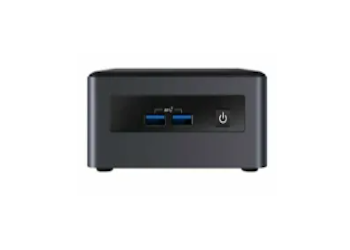
The small size is what lets more American companies join the boom. A mini computer draws little power, costs less than a traditional control rack, and can be swapped when it fails. One unit can run a packing station. Another can ride on an inspection cart out on a road, a yard, or a plant floor. Compact desktops and small edge boards both show up in real cells. The chassis in the photo is the kind of box a shop can bolt into a panel and reach with a keyboard when the program needs a change.
Manufacture Robotics helps members match that computer to the camera, the arm, and the job before the first part is run. Click through to the foods article to see one industry already lining up for this kind of cell.