Concept 3 of 11
Automation for Chemical Processing
Conducting a feasibility study
The first step is to conduct a feasibility study to assess the viability of the project. This involves analyzing the market demand, the competition, and the costs associated with building and operating an automated chemical processing company.
Designing the process flow
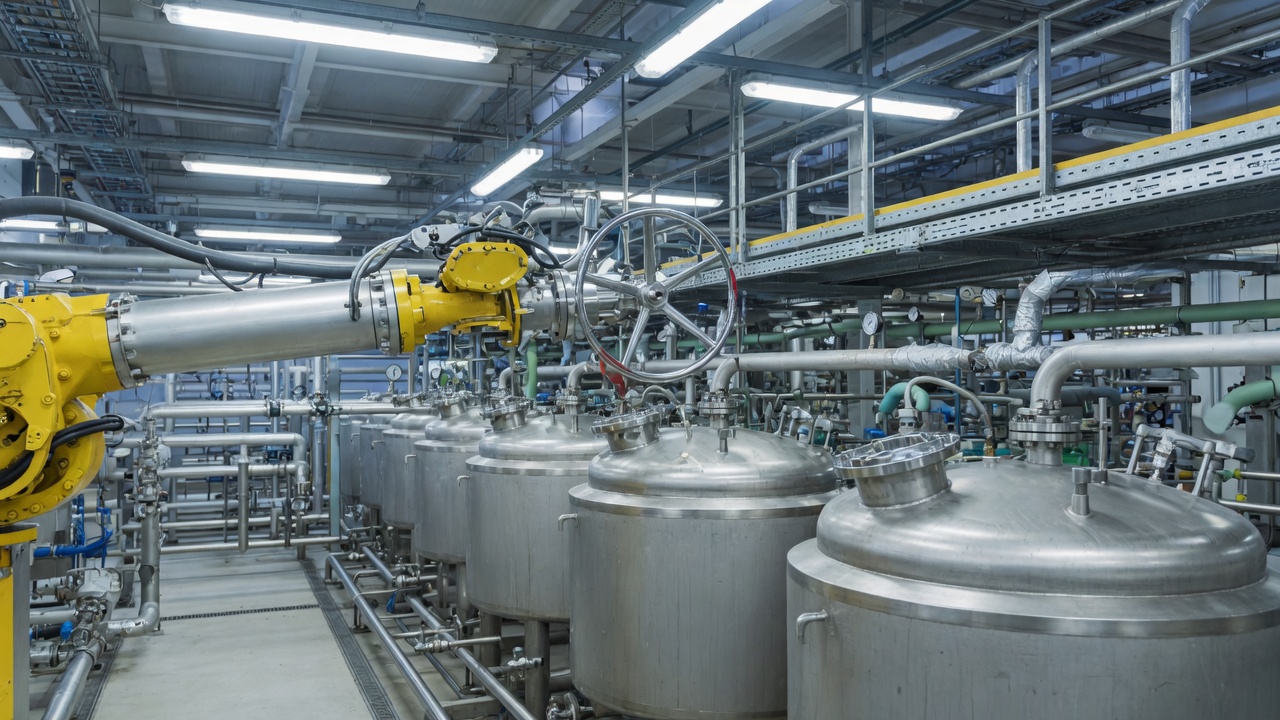
Once the feasibility study is complete, the next step is to design the process flow for the chemical processing operations. This involves identifying the necessary equipment, chemicals, and inputs required for the processing operations, and developing a layout plan for the facility. On this line the robot's job is the valve. It reaches a closed tank and turns the handwheel the same way every cycle.
Selecting the robots and automation technology
After the process flow has been designed, the next step is to select the robots and automation technology required to automate the chemical processing operations. This involves identifying the types of robots and automation technologies that will be needed, and selecting the specific models and brands of equipment to be used.
Design the production line
In this segment of the automation process equipment and parts are designed in the placement of each piece of equipment. This involves determining the layout of the line, the flow of materials and products, and the placement of each piece of equipment.
Choose the automation technology
There are many different automation technologies available, such as robotics, computer vision, and artificial intelligence. You need to choose the technology that is best suited to your manufacturing process and production line design.
Building the facility
With the process flow and automation technology identified, the next step is to build the facility. This involves constructing the building, installing the necessary utilities, and setting up the processing equipment and automation technology.
Testing and commissioning
Once the facility is built, the next step is to test and commission the equipment and automation systems to ensure that they function properly. This involves running trials and tests on the processing operations to ensure that the quality and efficiency of the processes meet the desired standards.
Staff training for maintenance and installations
After the equipment and automation systems have been tested and commissioned, the final step is to train staff on how to use and maintain the new equipment. This includes training on software and control systems, as well as maintenance and repair procedures.