Concept 1 of 11
Build and Make Clothing
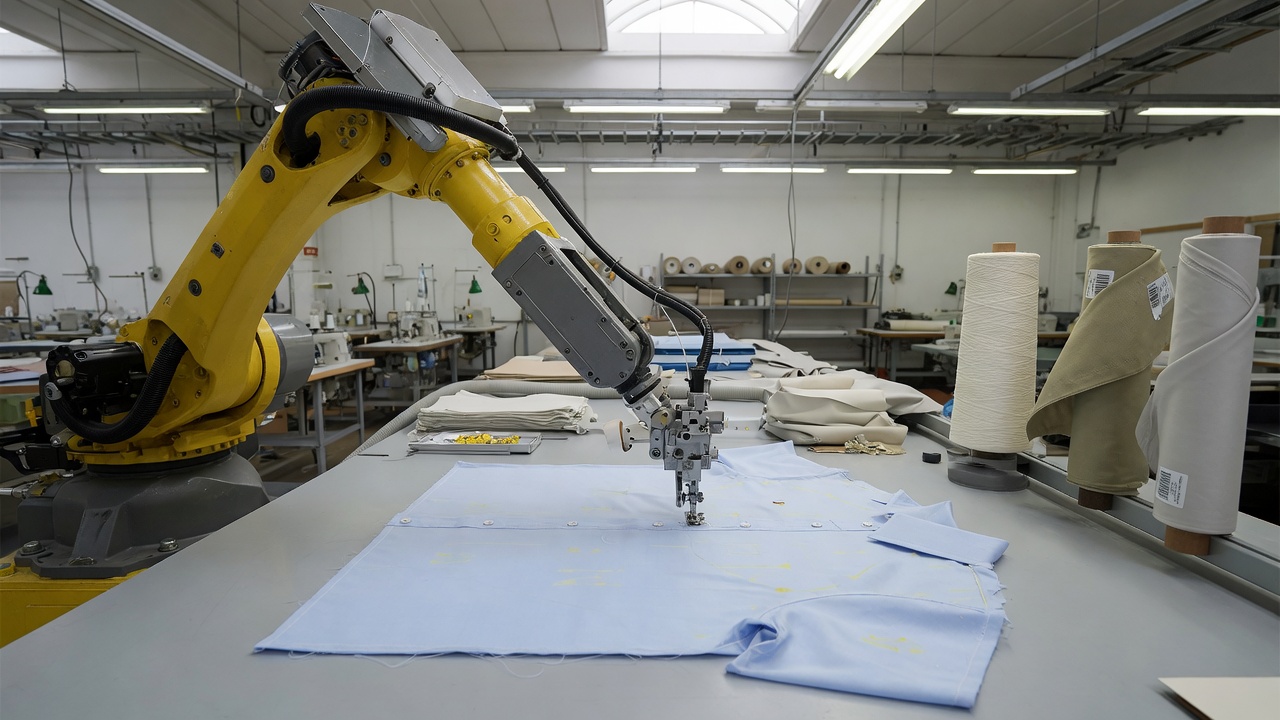
Designing an automated system to manufacture clothes involves a series of steps that need to be carefully planned and executed. Here are the steps you can follow to design such a system:
Define the manufacturing process
First, you need to define the manufacturing process you want to automate and creating a flow chart is a helpful way to start. It involves breaking down the process into individual steps, such as cutting, sewing, and finishing.
Determine the equipment required
This will include end-effectors which is the part of the robot that grips, cuts, or weilds an object. End-effectors are the part of the robot that manipulates or modifys an object. Once you have identified the steps involved in the manufacturing process, you need to determine the equipment required to automate each step. This could include cutting machines, sewing machines, pressing machines, and other specialized equipment.
Material preparation: The robot would need to prepare the fabric by cutting it to the appropriate size and shape for the shirt. This could be done using a combination of computer vision and cutting tools mounted on the robot's arm.
Sewing: The robot would then need to sew the various pieces of fabric together to form the shirt. This could be done using a combination of specialized sewing tools mounted on the robot's arms and computer-controlled sewing machines.
Buttonholes and buttons: Once the main body of the shirt is sewn together, the robot would need to create buttonholes and attach buttons. This could be done using specialized buttonhole and button-attaching tools mounted on the robot's arms.
Finishing touches: Finally, the robot would need to add any finishing touches to the shirt, such as hemming the edges, attaching a collar, and so on. This would again be done using specialized tools mounted on the robot's arms.
Throughout the process, the robot would need to be programmed to work with precision and accuracy, ensuring that each step is completed correctly and that the final product meets the required quality standards.
Design the production line
In this segment of the automation process equipment and parts are designed in the placement of each piece of equipment. This involves determining the layout of the line, the flow of materials and products, and the placement of each piece of equipment.
Choose the automation technology
There are many different automation technologies available, such as robotics, computer vision, and artificial intelligence. You need to choose the technology that is best suited to your manufacturing process and production line design.
Develop the software
Once you have chosen the automation technology, you need to develop the software that will control the equipment and manage the production process. This could involve programming robots, developing computer vision algorithms, or building machine learning models.
Test and optimize the system
Once the system is built, you need to test and optimize it to ensure that it is working correctly and efficiently. This could involve running test batches of clothing, monitoring the production line, and making adjustments to the software and equipment as needed.
Deploy the system
Finally, once the system is fully tested and optimized, you can deploy it to your production facility and start manufacturing clothes automatically.
Designing an automated system to manufacture clothes can be complex and challenging, but with careful planning and execution, it is possible to create a highly efficient and productive manufacturing process.