How to set up a cobot reagent filling system
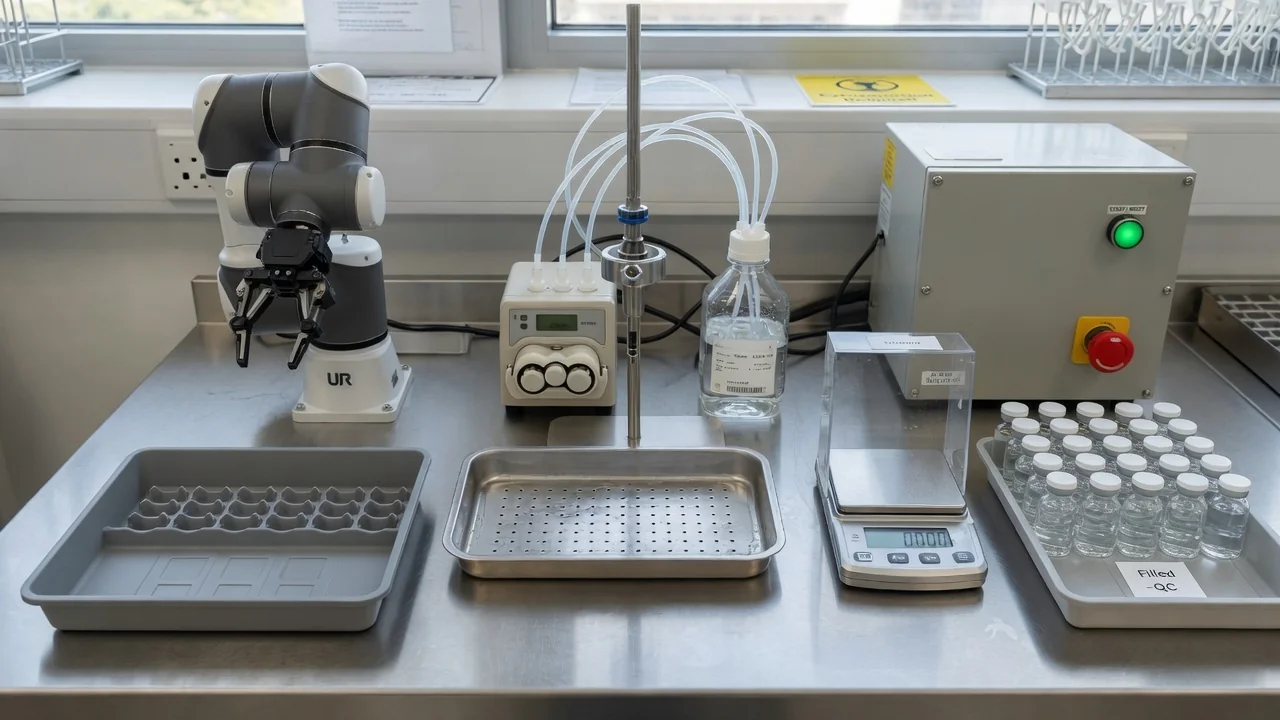
This how-to walks through a small cobot filling cell for reagent vials. A collaborative robot carries each vial to a fixed dispense nozzle, and a peristaltic pump meters the liquid. Commission the cell with water, one vial size, and one target such as 10 mL.
Cobot filling cell parts
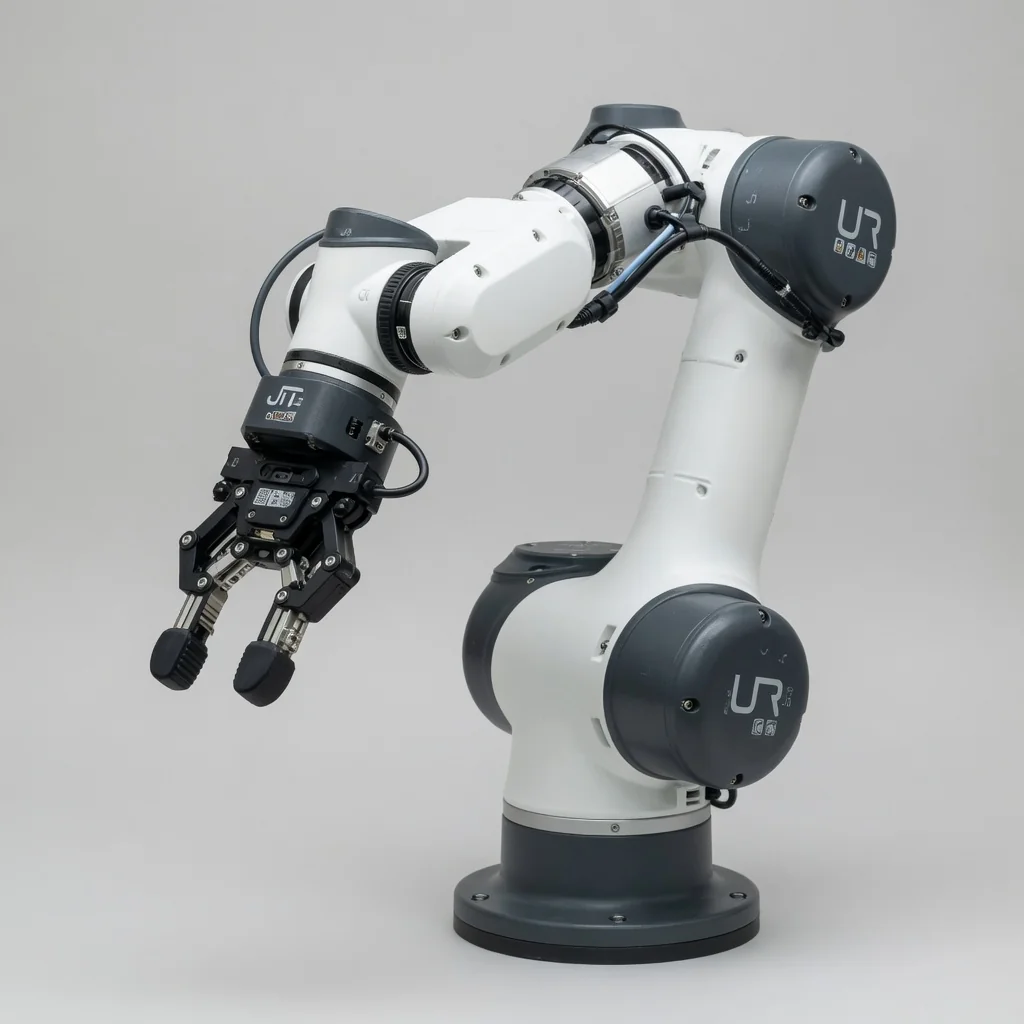
Collaborative robot arm
A desktop cobot with a two-finger gripper does the pick and place. It lifts an empty vial, holds it at the nozzle, and sets the filled vial down. The peristaltic pump handles the liquid dispense, and the arm carries only the vial.
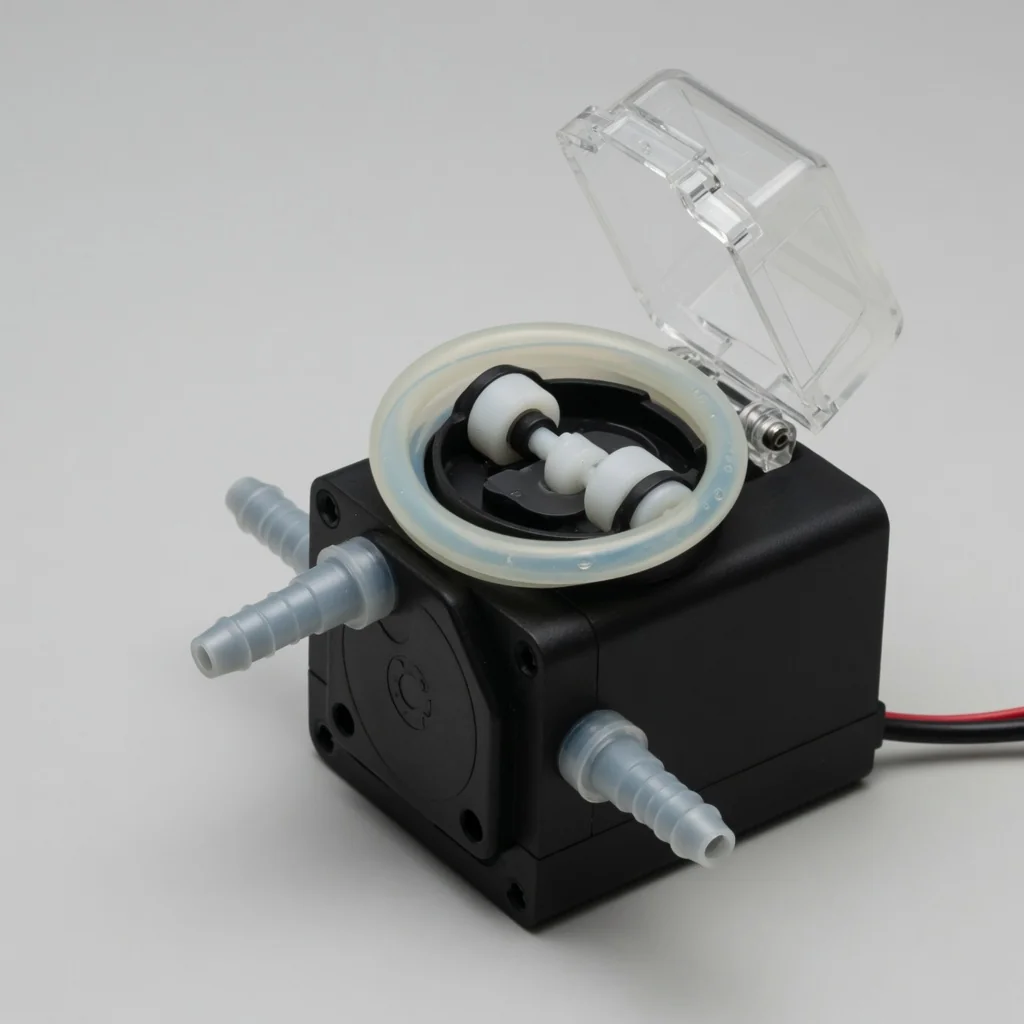
Peristaltic pump
A 12 V peristaltic pump is the liquid dispenser in this reagent filling setup. Rollers squeeze a silicone tube, so the reagent stays inside the tubing. Time a test shot into a beaker on the scale before you lock in a fill volume.
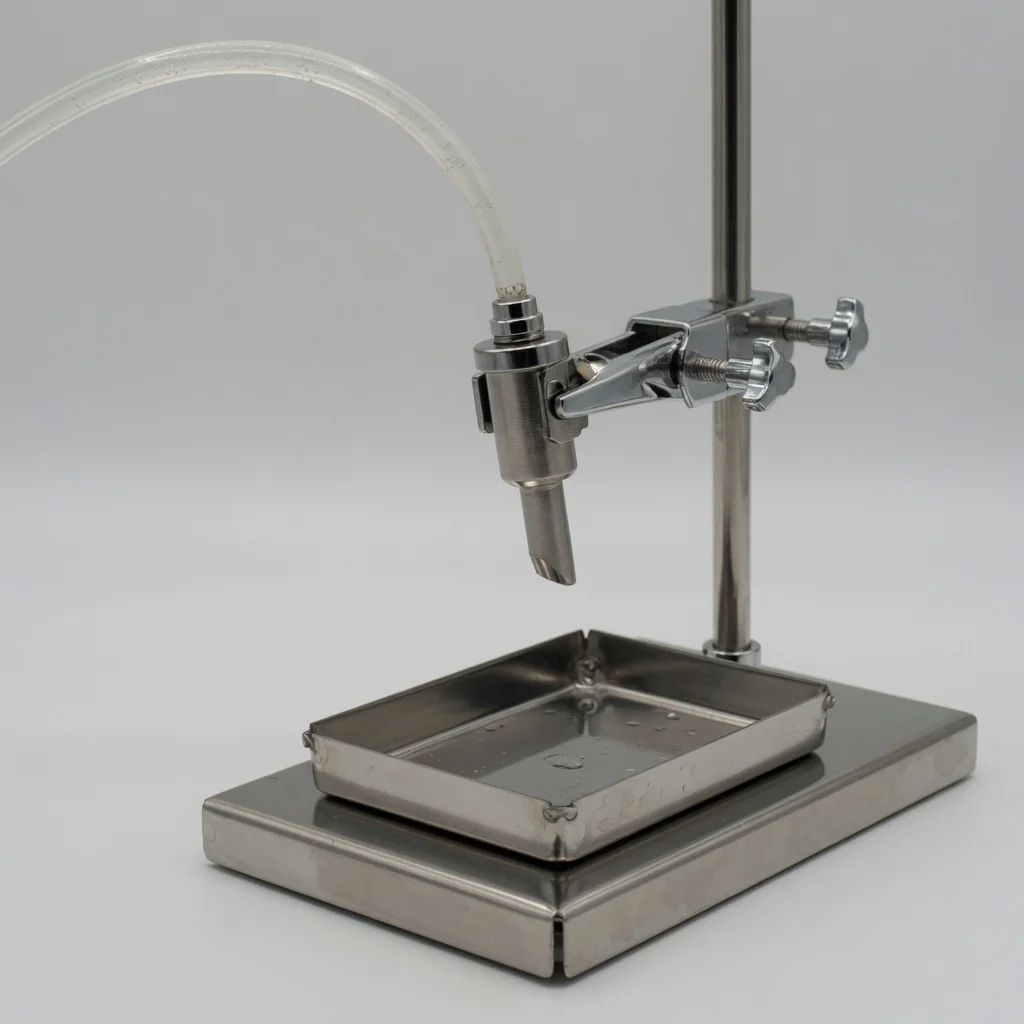
Fixed dispense nozzle
A blunt nozzle on a lab stand points down into a stainless drip tray. Clamp that stand and leave it, because the cobot positions are taught to this tip. A short discharge tube connects the peristaltic pump to the nozzle.
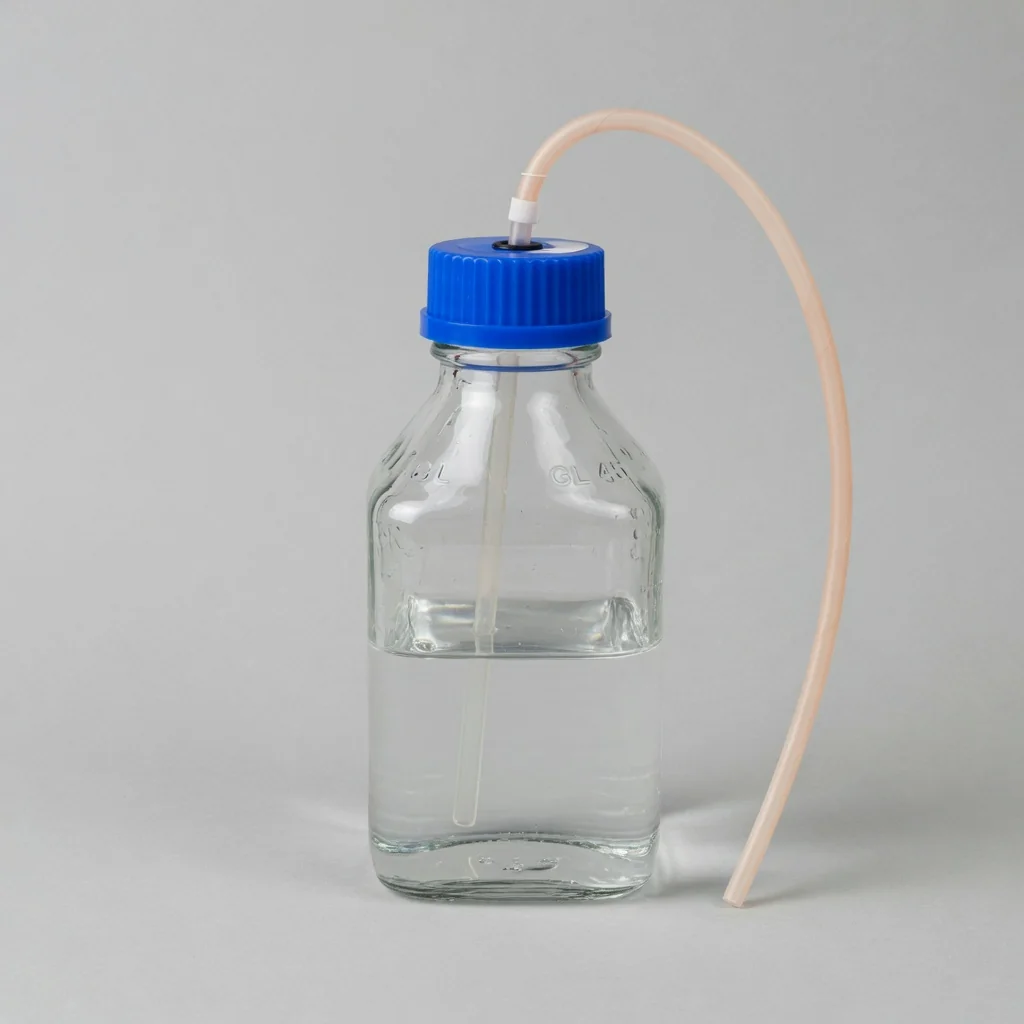
Reagent reservoir
The reagent supply is a glass media bottle with a dip tube through the cap. Set the bottle next to the pump so the suction line stays short. Prime the tube until the line is full of liquid and free of air bubbles.
Vial nest
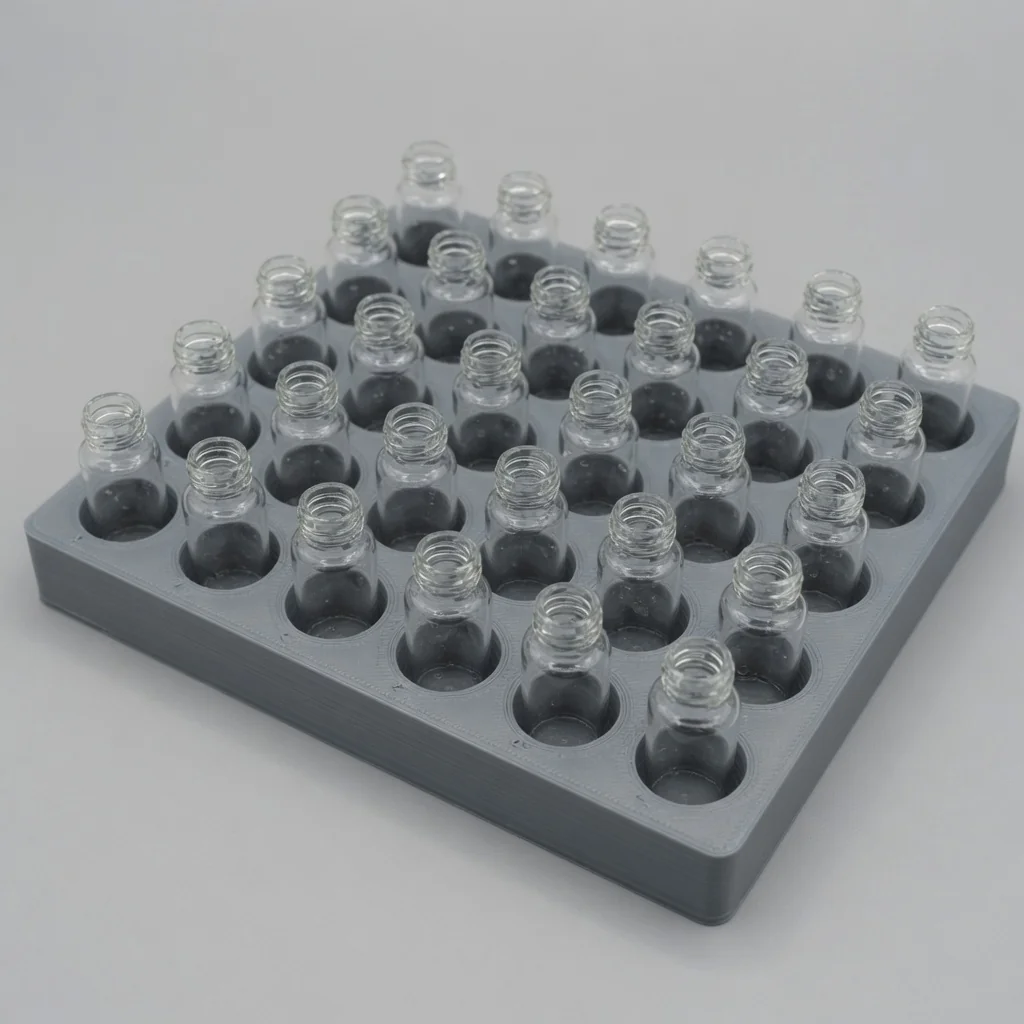
A 3D-printed nest holds the empty vials for the cobot pick. Each pocket keeps one vial upright and leaves the neck clear for the gripper. Match every pocket to the same vial so the pick position repeats.
Load-cell scale
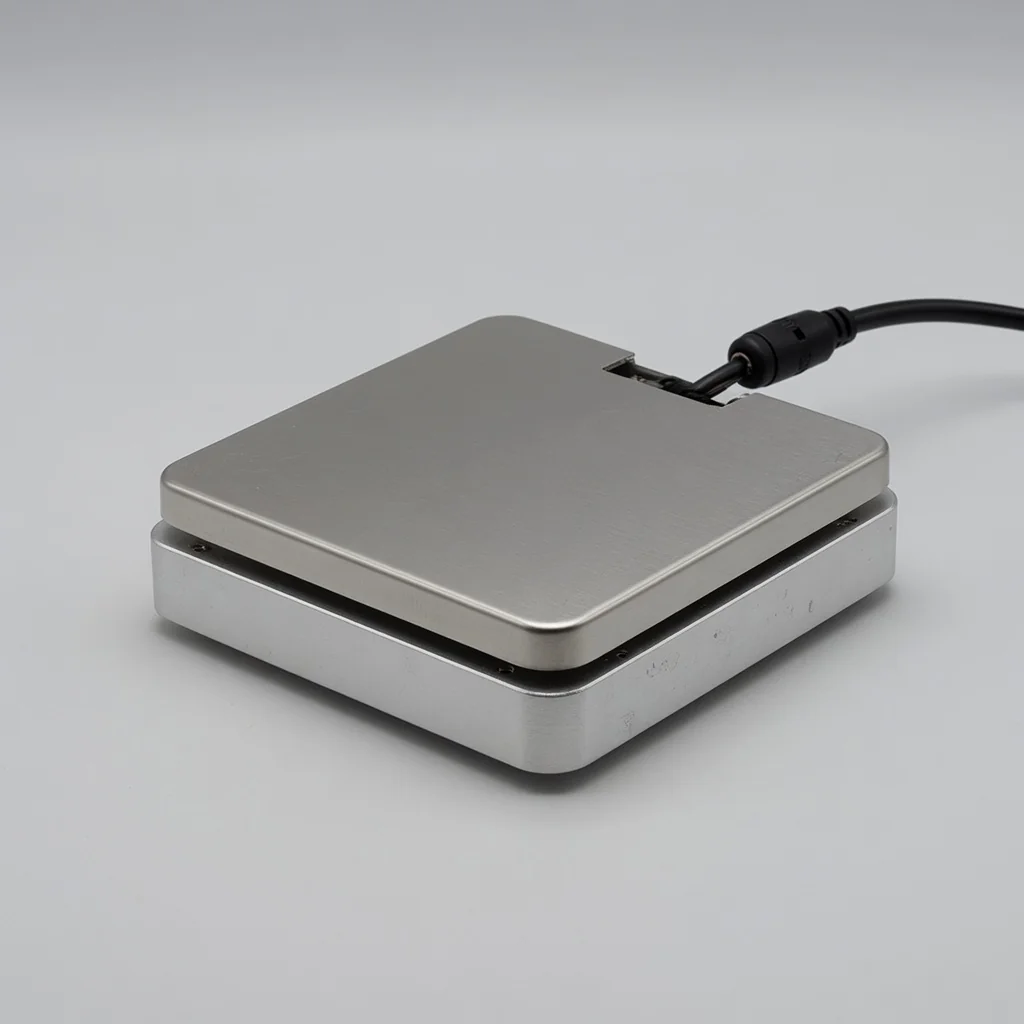
A small load cell checks the fill weight after each dispense. Place the vial on the platform and read the grams. For a water test, one gram is one milliliter, which shows a short fill or an overfill right away.
Cell control box
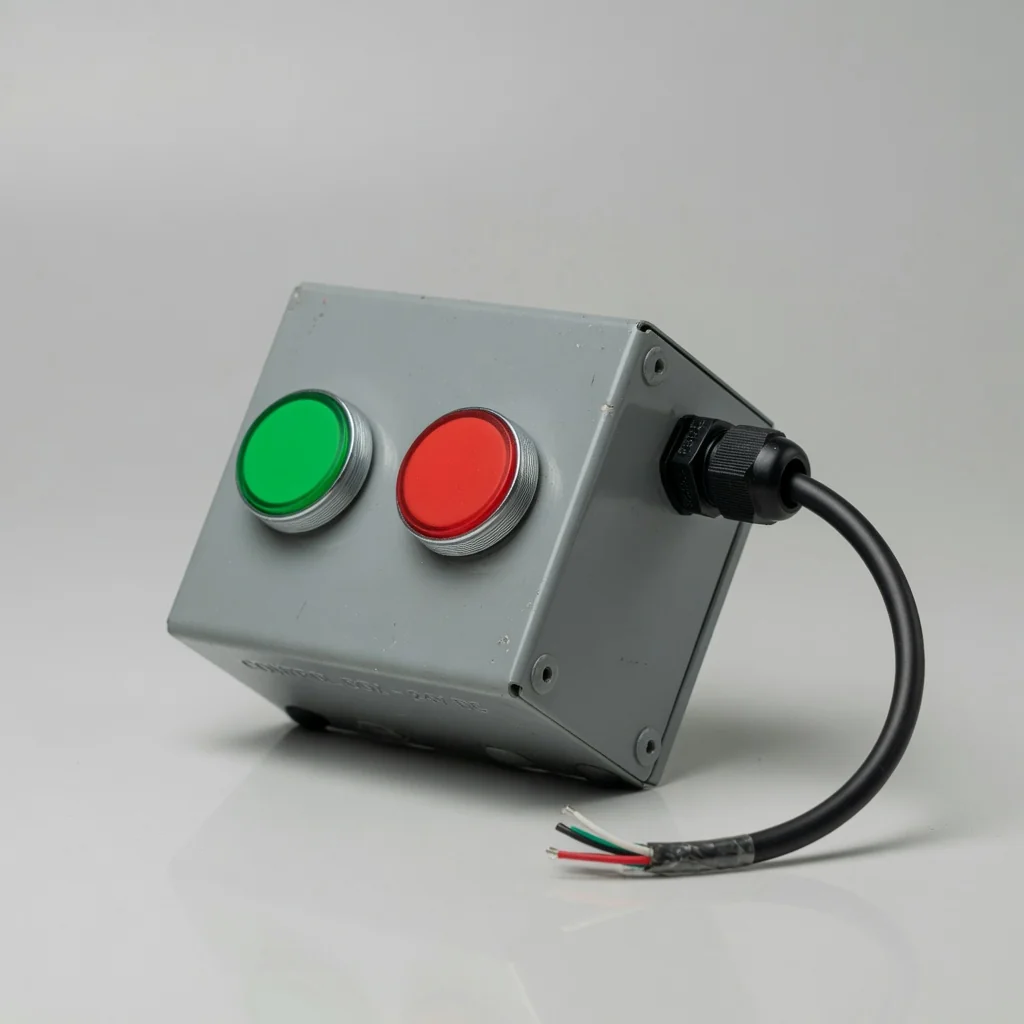
Start and stop for the cobot cell sit on this box. A relay runs the peristaltic pump when the robot signals that a vial is under the nozzle. The collaborative robot waits until the pump stops, then moves to the scale.
How to build the filling cell
Lay out the cobot cell
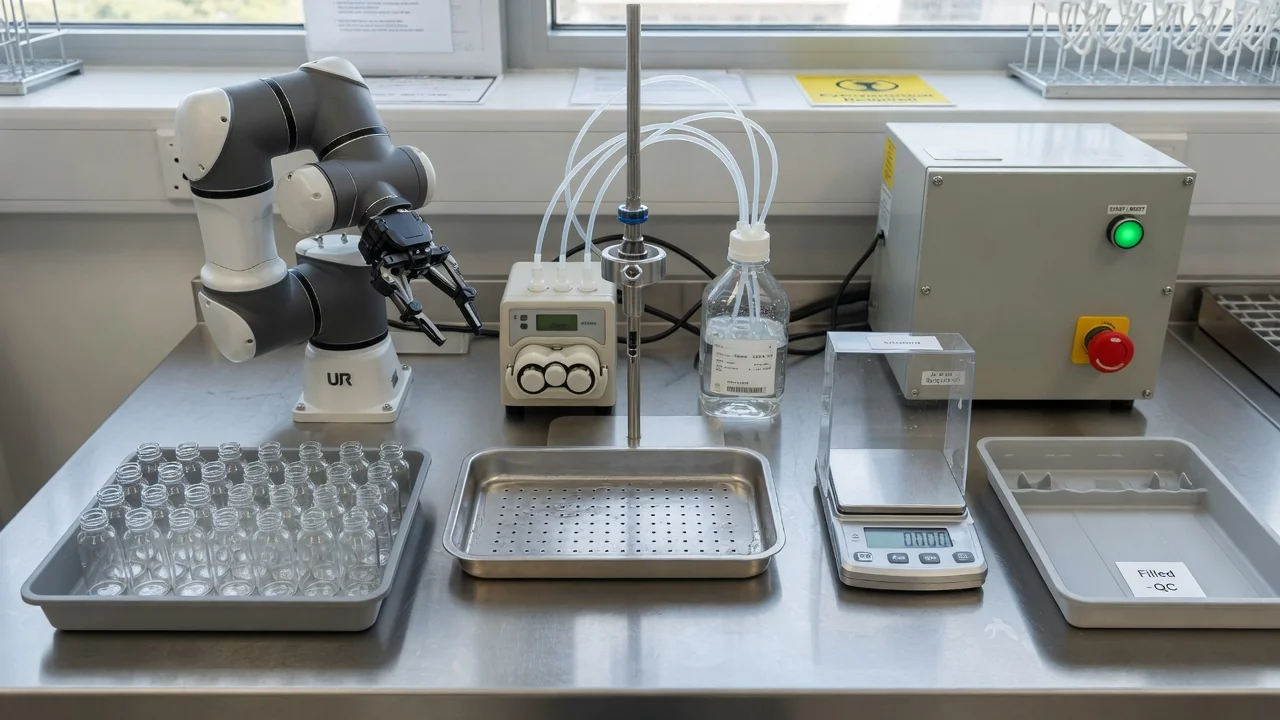
Bolt the collaborative robot on the left of the bench. Put the empty-vial nest in front of the arm, the dispense nozzle in the middle, the load cell to the right of the nozzle, and the outfeed tray at the far right. Keep each station inside the cobot reach.
Print the vial fixture
Print a pocket for the reagent vial you will fill. The screw neck needs to stand above the plastic so the gripper can close on it. Repeat that pocket across the infeed tray.
Plumb the dispense line
Run the dip tube from the reservoir into the peristaltic pump, then a short line from the pump to the nozzle. Aim the tip straight down over the drip tray. A check valve at the tip stops drips between fills.
Calibrate the fill volume
Run the pump for a counted time and catch the liquid in a beaker on the load cell. Divide the target volume by the grams per second you measured. That time is how long the pump relay stays on for each vial.
Teach the cobot waypoints
Teach four cobot positions: pick at the nest, dispense under the nozzle, weigh on the scale, and place in the outfeed. Move between them at a low speed with the force limit on. At the nozzle, the tip sits inside the vial neck and clear of the glass.
Pick an empty vial
The gripper closes on the vial neck and lifts it out of the nest. One pocket in the infeed tray is then open. This pick and place move stays slow so the collaborative robot can stop if it meets a hand.
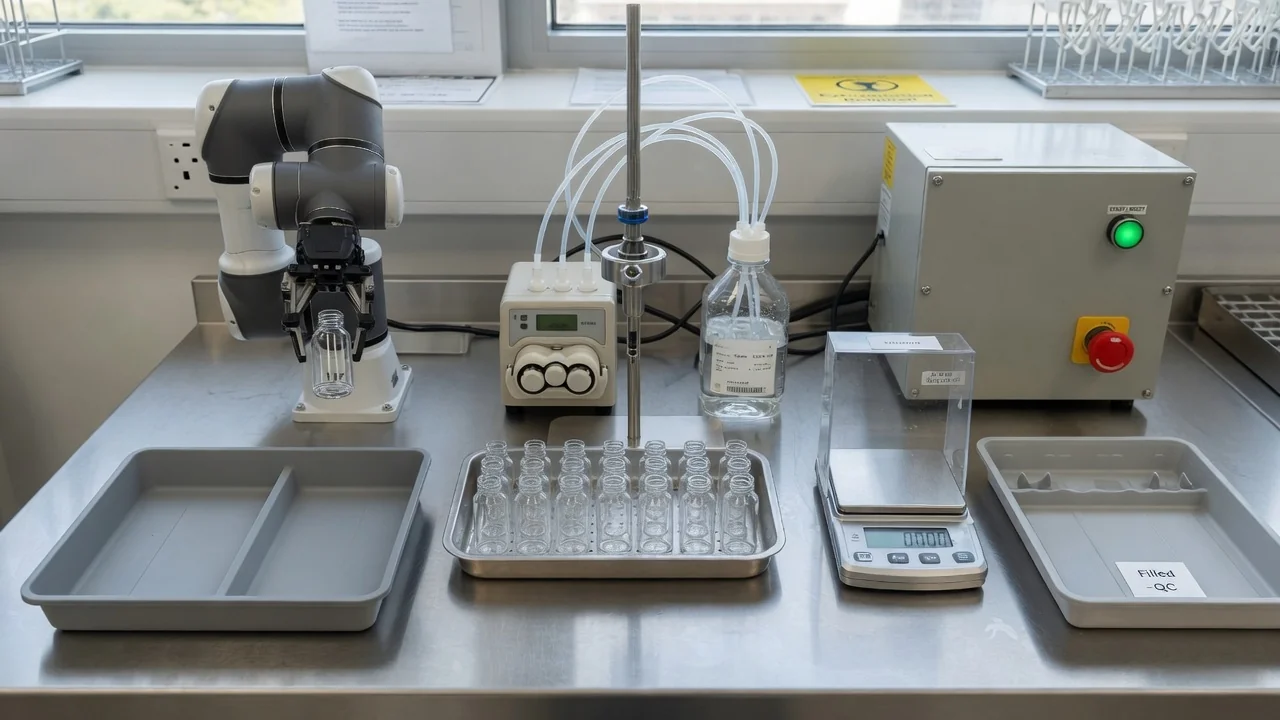
Dispense the reagent
The cobot holds the vial still under the fixed nozzle. A robot output turns on the pump relay and the liquid dispense starts. The arm keeps that pose until the peristaltic pump finishes the shot.
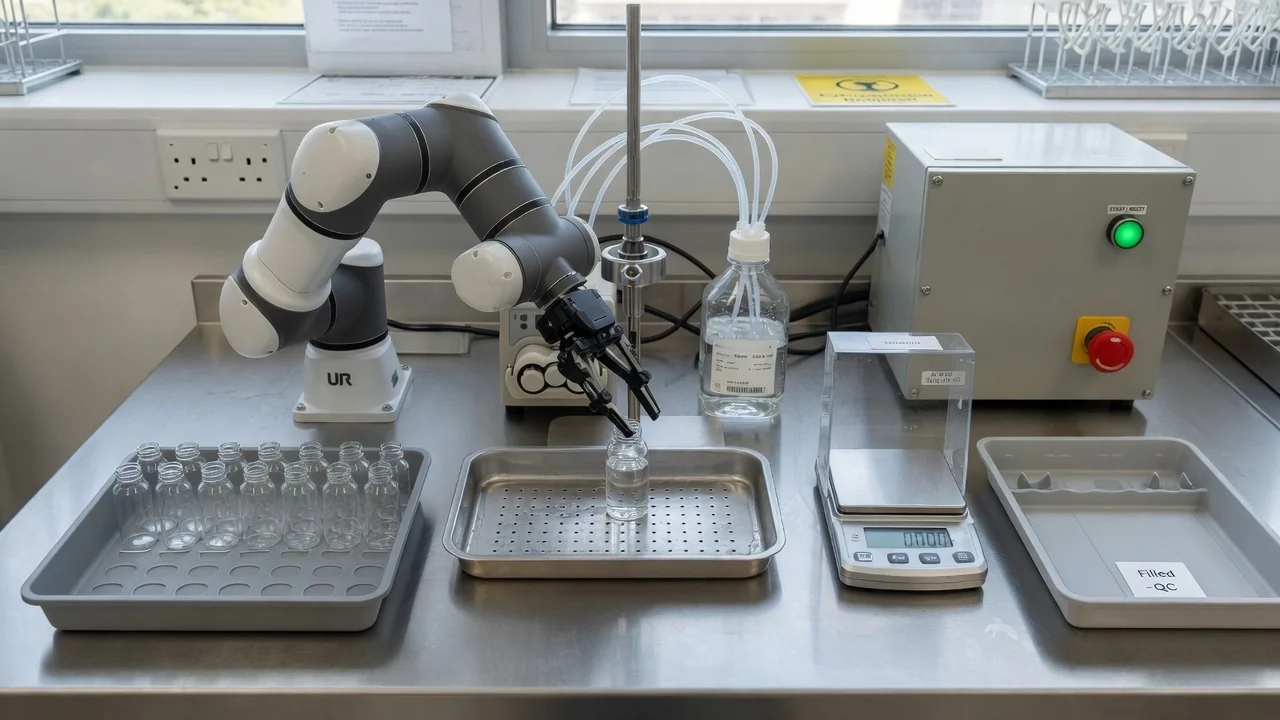
Watch the liquid stream
The stream leaves the nozzle and enters the open vial. The drip tray under the stand catches a miss. Wipe the tip if a drop hangs on after the pump stops, so the next fill volume stays accurate.
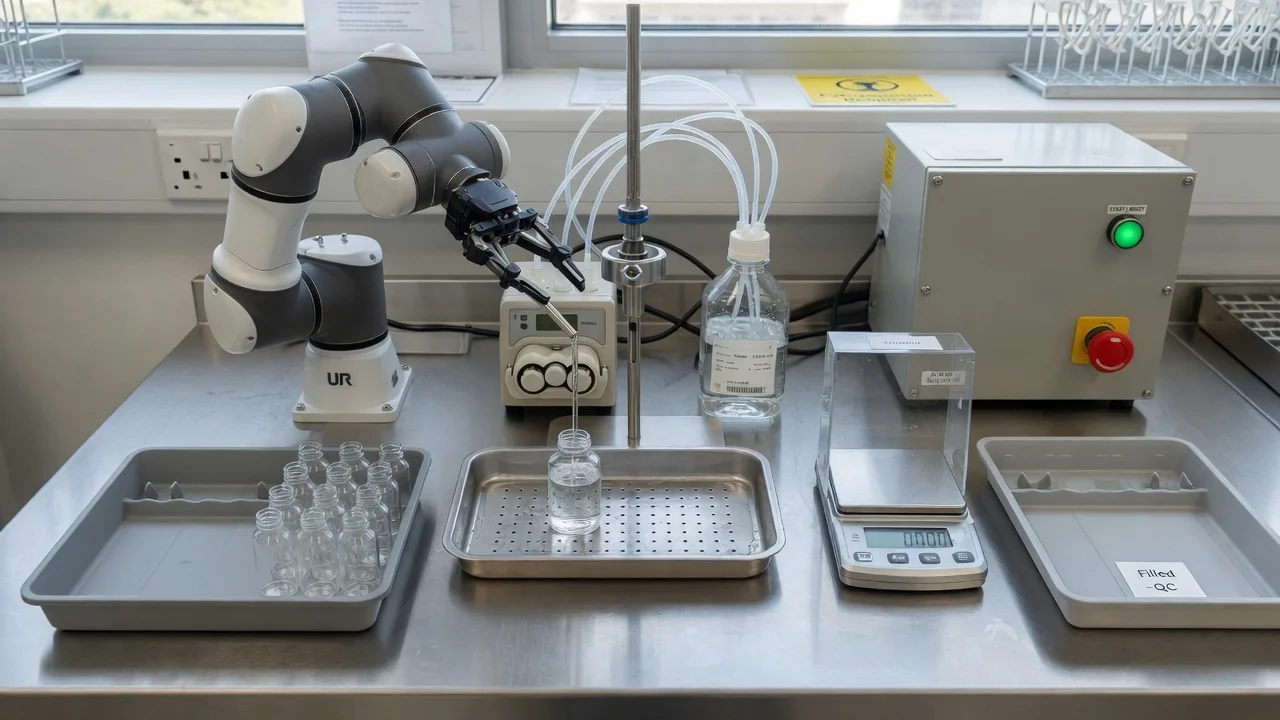
Check the fill weight
The cobot sets the vial on the load-cell scale. Keep the vial when the weight is inside your fill band. A light or heavy vial stays off the finished tray.
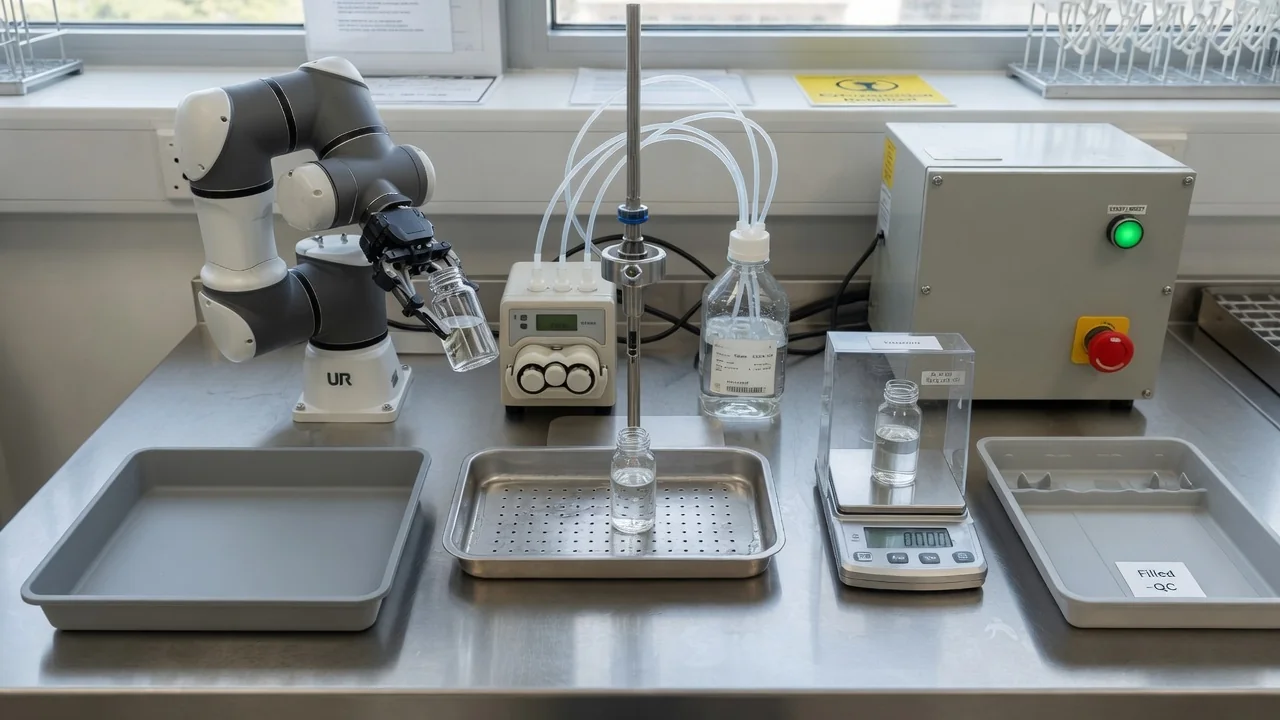
Place filled vials
Accepted vials go into the outfeed tray. Cap them by hand on this first cobot setup. Add a capping station later, after the reagent fill weight repeats from vial to vial.
Commission with water
Run a full tray of water and record every fill weight before any reagent goes in the line. When those fills are steady, drain the tubing, fit tube rated for the real liquid, and prime again. Leave the drip tray under the nozzle and the tube joints.
Reagent filling safety
Wear eye protection and leave the cobot force limit on while the cell runs. Treat this bench as a pilot reagent filler. A production filling line still needs the guards, wetted materials, and batch records your process calls for.