Article 7 of 13
Tactile Intelligence Overcomes Visual Occlusion in Agricultural and Assembly Robotics
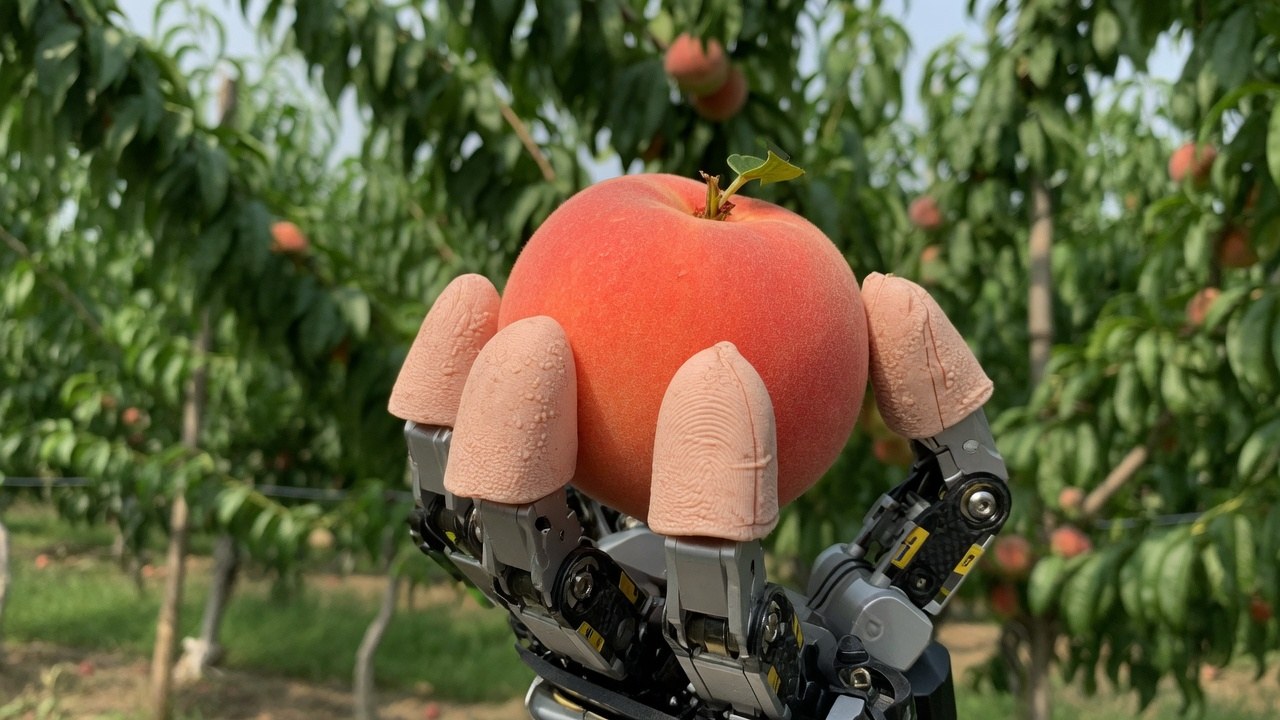
High-Density Tactile Sensing Enables Visionless Object Manipulation
Summary
While computer vision has historically anchored robotic perception, visual occlusions remain a major cause of task failure in agricultural harvesting, parcel sorting, and tight-clearance assembly. Recent breakthroughs in high-resolution vision-based tactile sensors (such as GelSight) and bio-inspired electronic skins (e-skins) allow multi-fingered grippers to manipulate fragile, hidden, or delicate objects using closed-loop touch feedback alone.
Deep Dive: Beyond Computer Vision
When a robot reaches into a dense leafy crop canopy to harvest fruit, or inserts its hand into a crowded bin of unsorted packages, camera lenses inevitably become blocked. Without tactile sensing, the robot cannot gauge contact force, leading either to crushed items or dropped grips.
Tactile intelligence solves this by giving end-effectors a sense of touch that matches or exceeds human fingertips.
Visual Perception vs. Tactile Perception
Cameras
Broad Spatial Context (Fails when blocked or in harsh lighting)
Tactile Arrays
Localized Surface Geometry + Slip Detection + Shear Force
Key Innovations Driving "Blind" Manipulation
- Optical Elastomeric Sensors: Deformable gel pads paired with internal micro-cameras convert contact pressure into high-resolution 3D heightmaps. The robot instantly detects surface textures down to the micrometer level, slip tendencies, and structural rigidity.
- Distributed Force-Vector Arrays: Capacitive and magnetic e-skin arrays embedded across whole robot hands (like XELA's uSkin) provide multi-axis normal and shear force measurements at kHz frequencies.
- Dynamic Slip Prevention: Closed-loop algorithms process micro-vibrations in real time, adjusting finger grip pressure milliseconds before an object begins to slide, preventing damage to delicate targets like soft fruit or glass vials.
Key Takeaways for Automation Integrators
- Unlocking Unstructured Handling: Combining vision-language models for macro-approach with tactile feedback for final micro-manipulation drastically increases pick-and-place reliability in cluttered environments.
- Quality Control at the Point of Contact: Integrated touch sensors can measure object compliance (hardness/softness) and check surface defects during the physical transfer stage without requiring dedicated station scans.
- Massive Growth in Humanoid Hand Design: Nearly one-third of humanoid robot developers are actively incorporating tactile arrays into multi-joint hands to perform human-level assembly tasks safely.
Let the camera approach and the finger finish
Two different questions
A camera answers questions about the room. Touch answers questions about the contact you are already making. Once the finger is in a bin, a canopy of leaves, or a nest of parts, the lens often sees the wrist instead of the object. The useful signal is then in the pad: how hard the squeeze is, which way the force is sliding, and whether the surface is starting to creep. A program that only checks the picture will call a blocked view a failure, or it will squeeze on a guess. Touch gives the hand a second chance after the picture has gone dark.
A firm grasp without one squeeze for every part
Think of two layers. The camera, or a language model, brings the hand near the right object. That approach can be off by a small distance and still be good enough. The touch layer finishes the grasp. It adds force until the object is held, eases off when the sensor says the part is soft, and tightens a little when a vibration says the part is slipping. Fruit, glass, and a soft pouch will not share one squeeze setting. A gel pad with a camera inside turns a dent in the skin into a small height map, so you see texture and the shape of the contact. A skin of many force pixels is the other family. It detects slip quickly, and it shows which side of the finger touched first. Start with a sensor that reports squeeze and slip before you buy the finest height map.
Test it on a miss you already have
Put touch on the station that already fails when the view is blocked. A bin pick, a connector insert, or a produce pack is an honest test. Count crushed parts and dropped parts for a week before the sensor, then again after. If those counts fall and the cycle still fits the line, the sensor earned the wiring. A prettier grasp in a demo has not earned the wiring if the scrap does not change. Keep the camera for the approach. Do not ask the fingertip to find the bin from across the room.
Suggested Website Tags
Help setting up a robot cell: choose the hardware, lay out the cell in software, and membership support for $19.99 a month.