Article 8 of 13
From Words to Action: How VLA Foundation Models Are Revolutionizing Robot Control
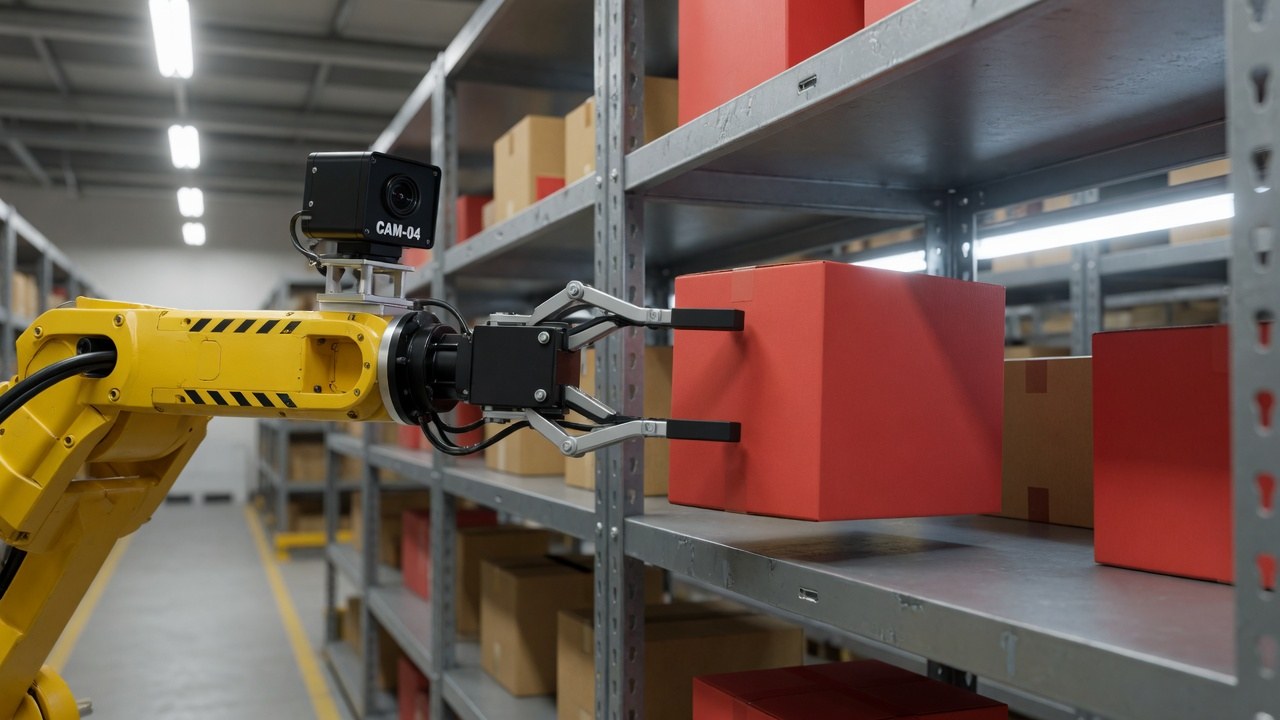
The Rise of Vision-Language-Action (VLA) Models in Commercial Deployment
Summary
The transition of embodied AI from research labs to commercial deployment has accelerated drastically. Vision-Language-Action (VLA) models—which directly translate natural language instructions and visual sensor streams into precise physical movements—are replacing rigid, multi-stage control code across warehouse automation, electronics assembly, and lab robotics.
Deep Dive: Unifying Perception, Language, and Control
Historically, building a robot to perform a task required stitching together three separate pipelines: vision algorithms to locate items, natural language processing to decode instructions, and motion planners to execute movements.
VLA foundation models collapse this modular stack into a single, end-to-end neural network. A high-resolution camera feed and a plain-text prompt (such as "Grab the red box from the top shelf and place it in bin B") enter the model, which outputs joint-level motor commands directly.
Traditional Stack
- Vision
- Language Parser
- Trajectory Planner
- Joint Control
VLA Model
- Visual Stream + Text Command
- Direct Motor Actions
Why Enterprise Developers Are Switching
- Zero-Shot & Few-Shot Generalization: Unlike traditional computer vision systems that require thousands of training images for every new SKU, VLA models draw on massive multimodal training datasets to recognize and manipulate novel, previously unseen objects immediately.
- No Re-Coding Needed: Facility managers and floor operators can change workflow rules simply by updating text prompts in natural language, eliminating the need to write custom trajectory code for new product lines.
- Handling Unstructured Environments: VLA models adjust to changing lighting, unexpected obstacles, and flexible packaging without freezing or throwing system exceptions.
Key Takeaways for Industry & AI Developers
- The End of Scripted Automation: Industrial deployments are moving from deterministic programming toward goal-driven behavior. Robots reason about the geometry of their surroundings rather than simply repeating programmed coordinates.
- Standardized Hardware Interfaces: Software companies are licensing general-purpose VLA foundations that can be fine-tuned and deployed across different arm geometries, mobile bases, and multi-finger end-effectors.
- Data Infrastructure Demand: As VLA models grow in size, training them requires high-fidelity physical teleoperation data and synthetic simulations, sparking major investments in robotic data collection platform infrastructure.
Where a sentence-to-motion model helps
Picture and words in, joint motion out
A vision-language-action model takes a camera picture and a sentence and tries to put out motion. The sentence might say to pick the red box and set it in bin B. The motion might be a stream of joint angles. The hope is to skip the older chain, where one program finds the box, another reads the sentence, and a third draws the path. That hope still sits inside a cell. The model does not invent a safe room. You do.
Say when the simple cell is enough
If the bin never moves, the light is steady, and bin B is a marked square, a camera check and a taught path can be the better tool. The model earns its keep when the object changes, the pile is messy, or the instruction changes faster than you want to redraw a path. Even then, give the arm limits the model is not allowed to cross. Name the space it may enter, the force that must stop it, and a lower speed when a person is near. The model may propose a move. The cell has to be able to refuse a bad one. Write the instruction the way you would for a new technician. Name the object, the place it goes, and the mistake you care about. "Pick the red box" fails when three boxes are red. A sentence that names the label and the left bin can be tried, filmed, and kept or thrown out.
Keep the old program until the new one misses less
Mount the camera so the hand does not hide the part at the moment of the grasp. Weigh the part and the gripper. Time the cycle against the line, not against a short clip. Keep a list of sentences that worked and sentences that made the arm hesitate. When one fails, fix the words or the fixture before you discard the whole model. Run the first week with a person at the stop. Keep the taught program until the new one misses less than the old one on your parts. A model that can handle a new object is valuable. A model that also moves toward a person, a guard, or the wrong bin is not ready to be left alone.
Suggested Website Tags
Help setting up a robot cell: choose the hardware, lay out the cell in software, and membership support for $19.99 a month.